Past research project
Developing Nanophosphors for Biological Assays
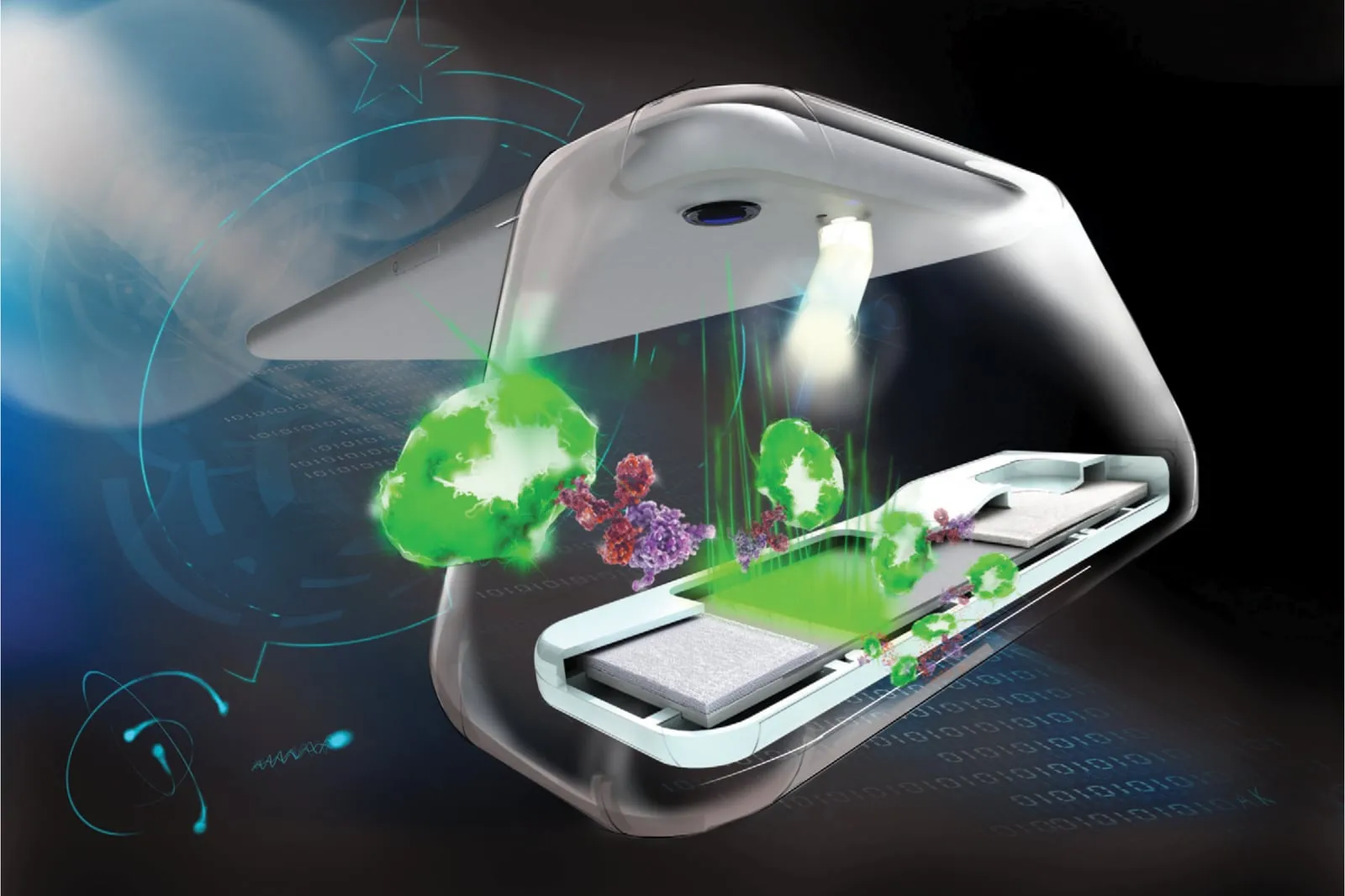
Persistent phosphors keep glowing for minutes to hours after the excitation source is removed, because charge carriers caught in defect traps are released slowly at room temperature. That long afterglow means a signal can be read after the excitation light is switched off, which removes the background autofluorescence that limits conventional fluorescent labels in diagnostic tests. The challenge is that very few compounds glow this long, and most of them break down in water.
The Brgoch group studied where this afterglow comes from and how to control it. Combining diffraction, X-ray absorption spectroscopy, and calculations, the group linked persistent luminescence in SrAl2O4:Eu2+ to intrinsic defects and showed how Al3+ substitution reshapes the trap states in ZnGa2O4:Cr3+. Microwave-assisted and reverse-micelle syntheses brought particle sizes down to the scale needed for biological use.
These nanophosphors became optical reporters in lateral flow assays developed with Richard Willson’s group in Chemical Engineering. A smartphone camera was enough to read the tests, and phosphors emitting different colors made it possible to detect several analytes on a single strip. The assays were applied to targets ranging from Leishmania parasite DNA to a urine biomarker for lupus nephritis.
Funded by
 NIH1R01AR072742-01