Targeting Earth-Abundant Superhard Materials with Big Data
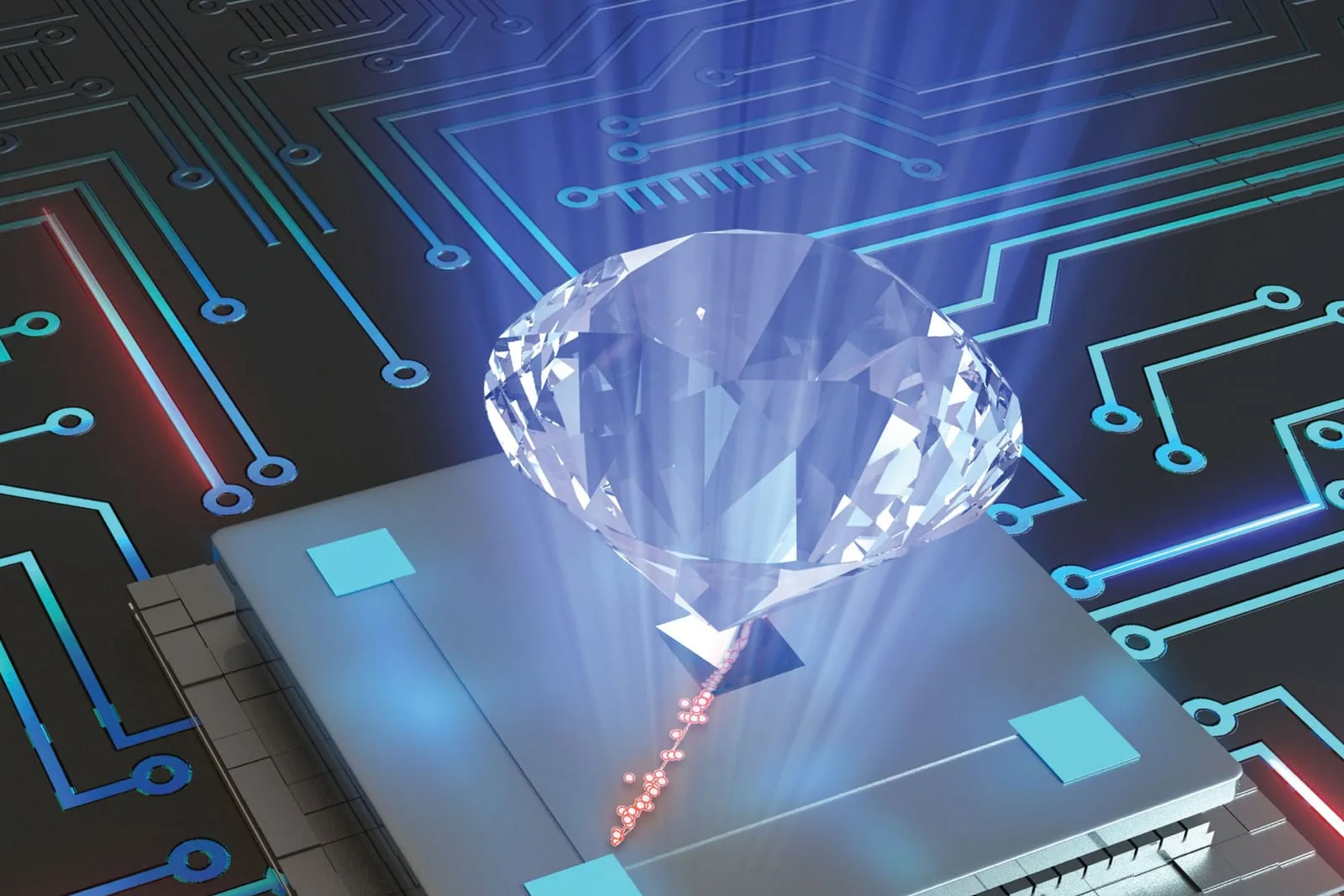
Superhard materials, those with a Vickers hardness above 40 GPa, cut, drill, and polish nearly everything in modern manufacturing. Diamond and cubic boron nitride dominate the field, but both require high pressure to make, and diamond reacts with iron at high temperature. Transition-metal borides and carbides offer an alternative that can be made at ambient pressure, yet the hardest examples rely on expensive and scarce 4d and 5d metals such as Re, Os, and Ir.
The Brgoch group searches for hard materials built from earth-abundant elements using machine learning. One of the group’s models predicted the bulk and shear moduli of more than 100,000 compounds and led directly to the synthesis of the ultraincompressible Mo0.9W1.1BC and ReWC0.8. Other models predict Vickers hardness itself as a function of applied load and temperature, and treating superhard materials as statistical anomalies reveals the rare compositions that conventional models overlook.
The group also targets harsh environments, where a material must stay hard while resisting oxidation at high temperature. Studies of rare-earth transition-metal silicides and MAX phases, together with machine-learning screens for solids that survive extreme conditions, guide the search for protective coatings and high-temperature components. These compounds are prepared by arc melting and microwave-assisted reactions and tested by micro-indentation, X-ray diffraction under pressure, and high-temperature oxidation measurements.